

Table of Contents
- Oxygen Concentrator vs Portable Oxygen Tanks: The Core Differences
- How an Oxygen Concentrator Pulls Oxygen From Room Air
- How a Portable Oxygen Tank Stores Compressed Oxygen
- Oxygen Tank vs Oxygen Concentrator Pros and Cons
- Portable Oxygen Tank Duration: How Long One Cylinder Lasts
- Oxygen Concentrator Battery Life and Power Needs
- Oxygen for Altitude Sickness: Why It Helps and When to Use It
- Total Cost of Ownership and Backup Planning
- Which One Should You Choose?
- Frequently Asked Questions
Last Updated: October 7, 2026
Oxygen Concentrator vs Portable Oxygen Tanks: The Core Differences
An oxygen concentrator pulls oxygen out of the air around you and delivers it through a tube, while a portable oxygen tank stores a fixed amount of compressed oxygen that runs out and needs replacing.
Here's the short version. Concentrators need power but never run out of "fuel" as long as they're plugged in or charged. According to the U.S. Food and Drug Administration guidance on oxygen equipment, both devices are considered medical equipment and are typically used under a prescription.
Below, we'll walk through how each one works, what they cost, and which situations call for which.
How an Oxygen Concentrator Pulls Oxygen From Room Air
An oxygen concentrator is a device that filters nitrogen out of ordinary room air and concentrates the remaining oxygen for you to breathe. Room air is about 21% oxygen. A concentrator pushes that air through a sieve material that traps nitrogen, leaving behind air that's roughly 90% oxygen or higher.
That's the whole trick, and it's a good one. You plug it in, turn it on, and it keeps producing concentrated oxygen as long as it has power.
Stationary concentrators live in one spot at home. Portable oxygen concentrators are smaller, battery-powered, and built for walking, flying, and moving around. The trade-off is that portables usually deliver less oxygen per minute than a big home unit.
How a Portable Oxygen Tank Stores Compressed Oxygen
A portable oxygen tank, also called an oxygen cylinder, stores medical oxygen as compressed gas under pressure. The tank itself is a sealed metal container. A regulator on top controls how fast the oxygen flows out, measured in liters per minute.
Tanks come in several sizes, from small cylinders that fit in a shoulder bag to larger ones that last most of a day. They're quiet, they don't need charging, and they work in a power outage without a second thought.
The catch is capacity. A tank holds a set amount of oxygen, and how long it lasts depends on your flow rate and the tank size. Higher flow settings drain it faster. There's no way around that math.
Oxygen Tank vs Oxygen Concentrator Pros and Cons
Here's the honest comparison. Neither option wins across the board, and the right pick depends on how you'll use it, what your prescription says, and where you're going.
One thing worth saying up front: these devices are not interchangeable for every prescription. If your prescription calls for continuous flow at a set liter-per-minute rate, a pulse-dose portable concentrator may not meet it.

Oxygen concentrator pros:
- No refills needed, it makes oxygen from room air
- Runs on battery or wall power, and many portables also run on a car adapter
- Consistent supply as long as it has power
- Good for daily home use and longer trips
- No tanks to store, lift, or swap
Oxygen concentrator cons:
- Needs charging or a power source
- Portable units are often heavier than small tanks
- Battery life limits how long you can be away from power
- Pulse-dose delivery may not match a continuous-flow prescription
- Higher upfront cost than a single tank
Portable oxygen tank pros:
- Lightweight and silent
- No power needed, works in an outage without a second thought
- Simple to operate
- Continuous flow is available on most regulators
- Reliable as a backup even if you use a concentrator day to day
Portable oxygen tank cons:
- Limited supply, it runs out
- Needs refilling or swapping, which means planning ahead
- Higher ongoing cost if you use a lot of oxygen
- Travel rules restrict some sizes, and carriers have their own requirements
- Lifting and carrying can be hard on shoulders, backs, and caregivers
| Feature | Oxygen Concentrator | Portable Oxygen Tank |
|---|---|---|
| Oxygen source | Room air | Stored compressed gas |
| Needs power | Yes | No |
| Needs refills | No | Yes |
| Weight | Heavier | Lighter |
| Runtime | Battery-limited | Supply-limited |
| Delivery | Often pulse-dose; some continuous | Usually continuous; some pulse-dose |
| Best for | Home and long trips | Short outings and backup |
A quick word on the delivery difference, because it trips people up. Pulse-dose releases a puff of oxygen when you breathe in, which stretches the supply. Continuous flow releases a steady stream whether you're inhaling or not, which drains the supply faster but matches prescriptions that call for it.
If you're visiting the high country and just want to feel better fast, a concentrator rental is usually the easier path. We deliver to vacation rentals and hotels, often the same day, and we walk you through the setup in person so there's no learning curve.
Portable Oxygen Tank Duration: How Long One Cylinder Lasts
Portable oxygen tank duration depends on two things: the size of the cylinder and your flow rate. A small cylinder set to a low continuous flow might last a couple of hours. The same cylinder at a high flow setting could be gone in under an hour.
Pulse-dose delivery changes the math. Instead of a steady stream, the device releases a puff of oxygen only when you breathe in. That stretches the supply considerably, which is why many portable systems use it.
If you're planning a day out, do the math before you leave. Know your flow rate, know your tank size, and add a buffer. Running out halfway up a trail is not the time to learn your runtime.
Oxygen Concentrator Battery Life and Power Needs
Oxygen concentrator battery life varies widely by model and flow setting. A portable unit might run several hours on a single charge at a low setting, then drop sharply at higher settings. Heat, altitude, and battery age all cut into that number.
Feel Better From Altitude Fast →
Most portables come with a rechargeable battery and can also run on wall power or a car adapter. That flexibility is the point. You charge overnight, use it during the day, and plug in whenever you can.
What most guides miss is the backup question. The American Lung Association's information on oxygen therapy notes that planning for power interruptions is a standard part of home oxygen use.
Oxygen for Altitude Sickness: Why It Helps and When to Use It
Oxygen for altitude sickness works because the problem is a shortage of oxygen in your blood. At high elevation, the air holds less oxygen per breath, so your body has to work harder.
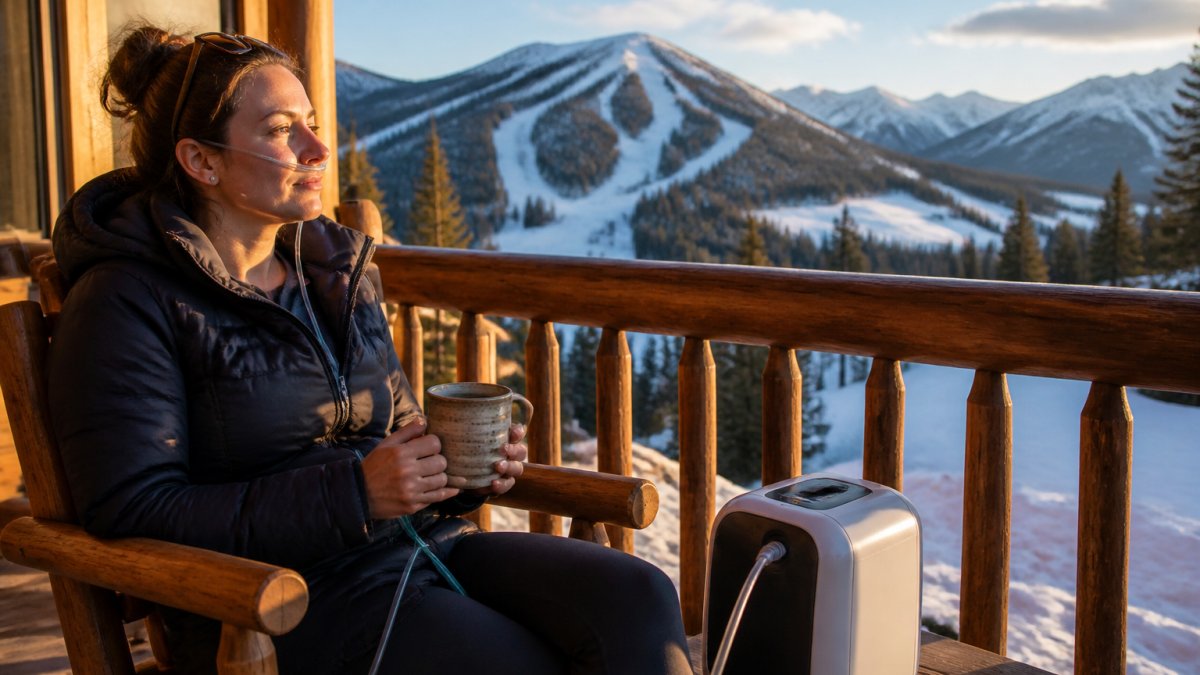
This is where the concentrator vs tank question gets practical. If you're visiting the mountains for a few days, a portable concentrator rental is often the simplest option. It doesn't run out, and it's easy to use once someone shows you how.
Altitude sickness can get worse fast, and it can cut a trip short. Oxygen helps you recover and get back to the things you came for.
Total Cost of Ownership and Backup Planning
Total cost of ownership looks different for each option, and most guides stop at the sticker price. Here's the fuller picture.
Concentrator costs over time:
- Higher upfront cost than a single tank
- Electricity to run it at home
- Replacement batteries every couple of years, depending on use
- Filters and occasional maintenance
- No refills, no deliveries, no tank swaps
Tank costs over time:
- Lower upfront cost
- Refills or swaps on a schedule, which add up fast if you use oxygen daily
- Regulator and carrying bag, often sold separately
- Delivery fees if you can't get to a refill location
- Replacement tanks over time
A common pattern is that tanks look cheaper on day one and concentrators look cheaper by month six. If you use oxygen every day, the refill math usually tips toward a concentrator.
For travelers, rental usually beats buying. ColoradoMountainOxygen rents high-altitude oxygen concentrators with delivery to your rental, starting at $160 for one day and scaling with longer stays, with a three-day package that most guests choose.
Now the part that matters more than money: backup planning. If you rely on oxygen, you need a plan for the moments when your primary device stops working.
If you rely on a concentrator:
- Keep a charged spare battery
- Keep a small tank on hand for outages
- Know where your nearest emergency power source is
- Have a phone number for your oxygen provider saved and easy to find
If you rely on tanks:
- Know where your next refill is coming from before you need it
- Keep one full spare tank at home
- Track your usage so you're not caught short
- Have a plan for getting tanks delivered if you can't drive
If you're traveling:
- Confirm your rental or hotel has reliable power
- Ask your oxygen provider about delivery and pickup
- Carry more oxygen than you think you need
- Know the nearest medical facility to where you're staying
If you're not sure which setup fits your trip, ask us. We'd rather answer a question in person than have you guess. That's part of why we deliver to vacation rentals and walk you through the equipment before we leave.
Which One Should You Choose?
Choose a concentrator if you need a steady supply, you have access to power, and you want to avoid refills. Choose a portable tank if you need something light, silent, and independent of electricity for shorter stretches. Many people end up using both, a concentrator for daily use and a tank for backup.
If you're visiting the high country and just want to feel better fast, a concentrator rental is usually the easier path. ColoradoMountainOxygen delivers to vacation rentals and hotels, often the same day, and we show you how to use the equipment in person so there's no learning curve. We've helped over 450+ Mountain Travelers Helped get back to skiing, hiking, and time with family.
Frequently Asked Questions
Is an oxygen tank better than an oxygen concentrator?
Neither is universally better. A portable oxygen tank stores a finite supply of compressed oxygen and is silent, light, and needs no power, but it runs out and must be refilled or replaced. An oxygen concentrator pulls concentrated oxygen from room air and runs on battery or wall power, so it keeps producing oxygen as long as it has power. For a week-long rental at altitude, a concentrator usually means no refill runs. For a short walk or a backup during a power outage, a tank can be simpler.
What is the downside of using an oxygen concentrator?
It needs a power source, so battery life and charging matter. Most units are heavier than a small tank, and some make a soft humming sound. Performance can also drop at very high elevation or in extreme cold, which is worth checking before you rely on one for a full day on the slopes. A backup supply is a smart add-on for anyone using oxygen daily.
Which is easier to use for a short trip: an oxygen concentrator or a portable oxygen tank?
For a short trip, a portable oxygen tank is often easier because there is nothing to charge and no settings to learn. You open the valve, set the flow rate, and breathe. A concentrator takes a few minutes to set up and needs a charged battery, but once running it never needs a refill. If you are staying in a rental for several days, the concentrator usually saves time overall.
Can I use an oxygen concentrator instead of an oxygen tank?
In many cases, yes, but it depends on your prescribed flow rate and how you use oxygen. Concentrators work well for stationary use at home or in a rental and for many portable needs. If your doctor prescribed continuous high-flow oxygen, a tank or a specific concentrator model may be required. Always confirm with your healthcare provider before switching devices.
Altitude sickness doesn't have to end your trip early. ColoradoMountainOxygen delivers easy-to-use oxygen concentrator rentals to your vacation rental, often the same day, and we take the time to show you exactly how to use them. Whether you're traveling solo, bringing the family, or hosting a wedding at elevation, our team is here to help you breathe easier and enjoy the mountains. Get started with ColoradoMountainOxygen and get back to the trip you came for.