Table of Contents
- How Long Does Altitude Sickness Last? A Clear Timeline
- How Long Does Mild Altitude Sickness Last Without Treatment?
- How to Get Rid of Altitude Sickness Fast: Steps That Work
- Severe Altitude Sickness Symptoms: When to Seek Medical Attention
- Does Drinking Water Help Altitude Sickness?
- Factors That Change How Long Altitude Sickness Lasts
- Frequently Asked Questions
Last Updated: October 5, 2026
How Long Does Altitude Sickness Last? A Clear Timeline
Most cases of altitude sickness last between one and three days once you stop climbing, and the single biggest factor in how long does altitude sickness last is what you do in the first few hours after symptoms start.
Altitude sickness is the body's response to reduced oxygen availability at high elevation, where low atmospheric pressure means each breath delivers less oxygen than it did at home. The CDC guidance on high-altitude travel and illness notes that anyone ascending above roughly 8,000 feet can be affected, regardless of fitness level.
Here's the short version before we get into detail:
Severity |
Typical Duration |
What Usually Resolves It |
|---|---|---|
Mild (AMS) |
1-2 days |
Rest, hydration, stopping ascent |
Moderate |
2-4 days |
Descent, supplemental oxygen, medical advice |
Severe (HACE/HAPE) |
Days to weeks, hospital-dependent |
Emergency descent and treatment |
Below, we break down each timeline, the symptoms that signal trouble, and the steps that shorten recovery.
Mild Cases: One to Two Days After Descent or Acclimatization
Mild acute mountain sickness typically clears within one to two days once you stop gaining altitude and give your body time to acclimatize.
What most guides miss is that "taking it easy" has a specific meaning at elevation.
If symptoms are mild and you're holding steady, you can usually wait it out. If they're getting worse hour by hour, that's your signal to act rather than rest.
Moderate and Severe Cases: When Recovery Stretches Past 48 Hours
Recovery stretches past 48 hours when symptoms are moderate or when someone keeps ascending despite them. Moderate altitude illness involves a headache that won't quit, repeated vomiting, dizziness, and marked fatigue that rest doesn't touch.
Severe high-altitude illness, including high-altitude cerebral edema (HACE) and high-altitude pulmonary edema (HAPE), is a medical emergency. HACE involves swelling in the brain; HAPE involves fluid in the lungs. Both can develop within a day or two of worsening symptoms and require immediate descent and medical attention.
How Long Does Mild Altitude Sickness Last Without Treatment?
Mild altitude sickness often resolves on its own in one to two days without any treatment, provided you don't climb higher. That's the key caveat.
Without treatment and without stopping the ascent, symptoms can linger for three to four days or worsen into something more serious.
A practical rule: if mild symptoms aren't improving after 48 hours of rest, or if they're getting worse at any point, treat it as moderate and seek guidance.
How to Get Rid of Altitude Sickness Fast: Steps That Work
The fastest way to get rid of altitude sickness is to stop climbing, rest at your current elevation, hydrate, and use supplemental oxygen if symptoms are significant.
Stop Ascending and Rest at Your Current Elevation
Stopping the climb is the first and most important step. Every additional foot of elevation gain works against a body that's already struggling, and descent remains the single most effective treatment for altitude illness.
Rest means actual rest: no skiing, no hiking, no hot tub. Sleep is helpful, though some people sleep poorly at altitude for the first night or two, which is normal.
Supplemental Oxygen and When to Use It
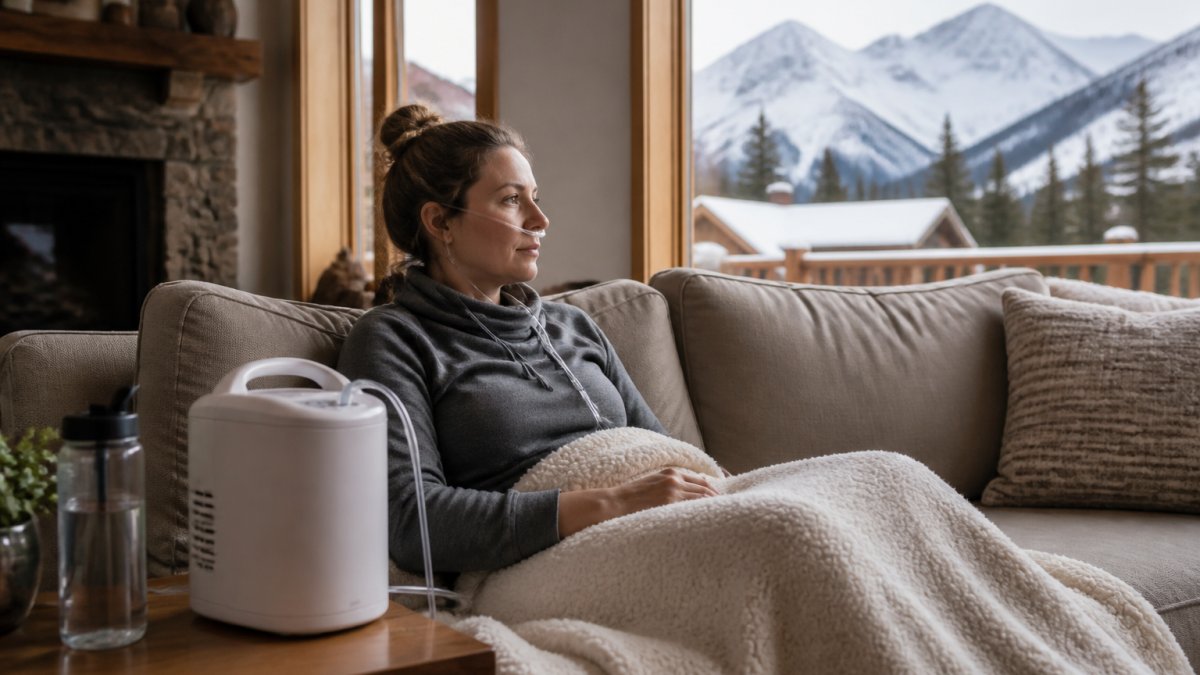
Supplemental oxygen raises the oxygen concentration you breathe, which helps relieve headache, fatigue, and shortness of breath while your body acclimatizes. It doesn't replace acclimatization, and it doesn't fix HACE or HAPE, but for mild to moderate symptoms it's the fastest relief available without descending.
For visitors who'd rather not cut a trip short, our Feel Better From Altitude Fast concentrator rental starts at $160 for one day, with multi-day packages that bring the daily cost down. We deliver to your rental, show you how to use the equipment in person, and you can add days later for $50 per day if you decide to extend.

Severe Altitude Sickness Symptoms: When to Seek Medical Attention
Seek medical attention immediately if symptoms include confusion, difficulty walking, breathlessness at rest, chest tightness, or a cough producing pink or frothy fluid. These point to HACE or HAPE, and they are emergencies, not inconveniences.
Severe symptoms to watch for:
Feel Better From Altitude Fast →
- Confusion, disorientation, or unusual behavior
- Loss of balance or inability to walk a straight line
- Shortness of breath while sitting still
- Chest pain or a wet, gurgling cough
- Vomiting that won't stop
- Bluish lips or fingertips
The National Park Service high-altitude illness safety information advises descending immediately when these signs appear, since descent is the most reliable treatment and delay is the main reason severe cases become critical.
Does Drinking Water Help Altitude Sickness?
Drinking water helps altitude sickness by supporting the body's adjustment to dry, high-elevation air, but hydration alone won't cure it.
Aim for steady water intake through the day rather than chugging at once, and skip alcohol for the first day or two. Alcohol worsens dehydration and disrupts the sleep you need for acclimatization.
What hydration does not do is replace oxygen. If your headache and nausea persist despite drinking well, the problem isn't water, and adding oxygen or descending is the better move.
Factors That Change How Long Altitude Sickness Lasts
Several factors shift how long altitude sickness lasts, including how fast you ascended, how high you sleep, your individual susceptibility, and whether you descend or use supplemental oxygen. Two people on the same trip can have very different timelines.
The biggest variables:
- Rate of ascent. Climbing faster than your body can acclimatize is the most common cause of prolonged symptoms. Gradual ascent, with sleeping altitude increases of roughly 1,000 to 1,500 feet per day above 8,000 feet, gives the body time to adjust.
- Sleeping altitude. How high you sleep matters more than how high you climb during the day. A day trip to a high pass is easier on the body than sleeping there.
- Individual susceptibility. Some people get sick at elevations where others feel nothing. Prior altitude sickness is one of the better predictors of future episodes.
- Action taken. Descent and supplemental oxygen shorten recovery. Pushing through lengthens it.
- Underlying health. Heart and lung conditions can make altitude harder to tolerate, and anyone with these should talk to a clinician before traveling high.
How Long Symptoms Last After You Return to a Lower Altitude
This is the question most guides skip, and it is the one that matters most once you are back down. The general pattern:
- Mild AMS after descent: headache, nausea, and poor sleep usually ease within 6 to 24 hours, and most people feel normal within a day.
- Moderate AMS after descent: expect one to two days for symptoms to fully clear, sometimes a bit longer if you were sick for several days before descending.
- After HACE or HAPE: recovery is measured in days to weeks and should be guided by a clinician. Fatigue, headaches, and reduced exercise tolerance can linger well after discharge.
A useful rule of thumb: symptoms that are clearly improving within the first 24 hours at lower elevation are following the expected course. Symptoms that are not improving, or that are getting worse after you have descended, are a reason to seek medical evaluation rather than wait it out.
When Lingering Symptoms Need Evaluation
Most altitude symptoms resolve as oxygen availability improves. But some patterns warrant a call or a visit:
- Symptoms that persist beyond 48 hours at lower elevation
- A headache that is severe, worsening, or different from your usual headaches
- Ongoing shortness of breath, chest discomfort, or a persistent cough
- Confusion, memory problems, or trouble concentrating that does not clear
- Any symptom that improves at altitude with oxygen but returns every time you go back up
That last pattern is worth naming: if oxygen reliably relieves your symptoms and they return the moment you stop it, you have not acclimatized, you have masked the problem.
If you're coming from sea level and flying straight into a mountain town, expect your body to need a full day or two before it feels normal. Planning that into the itinerary is the difference between a good trip and a rough one.
Frequently Asked Questions
How do you get rid of altitude sickness fast?
The fastest path is to stop climbing and rest at your current elevation. Supplemental oxygen can relieve headache, fatigue, and shortness of breath within minutes to hours. Over-the-counter pain relievers help with headaches, and prescription medications like acetazolamide may speed acclimatization when a doctor recommends them. If symptoms do not improve within 24 hours or get worse, descend to a lower altitude and seek medical attention. In Summit County, oxygen concentrator rental delivered to your rental property lets you recover without leaving your accommodations.
What are the three stages of altitude sickness?
Altitude illness is generally described in three stages. Acute mountain sickness (AMS) is the mildest, with headache, nausea, dizziness, and fatigue. High-altitude cerebral edema (HACE) is a severe form where the brain swells, causing confusion, trouble walking, and extreme drowsiness. High-altitude pulmonary edema (HAPE) is another severe form where fluid builds in the lungs, causing breathlessness at rest and coughing. HACE and HAPE are medical emergencies requiring immediate descent and treatment.
How do I know if my altitude sickness is severe?
Severe altitude sickness symptoms include shortness of breath at rest, confusion, difficulty walking, coughing up pink or bloody fluid, chest tightness, and inability to stay awake. These signs point to HACE or HAPE, which are life-threatening. If you notice any of them, descend to a lower altitude immediately and seek emergency medical care. Do not wait to see if symptoms improve on their own. Mild headache or nausea that responds to rest and oxygen is not the same as these emergency signs.
Does drinking water help altitude sickness?
Hydration helps your body cope with altitude, but water alone will not cure altitude sickness. At high elevation, you lose more fluid through breathing and urination, and dehydration can worsen headache and fatigue. Drinking water regularly supports recovery and helps you feel better, but it does not replace acclimatization, descent, or oxygen therapy. Pair steady hydration with rest and, if symptoms persist, supplemental oxygen or a trip to a lower elevation.
How long does mild altitude sickness usually last?
Mild altitude sickness typically resolves within one to two days once you stop ascending and let your body acclimatize. Some people feel better within hours of resting and hydrating, while others need a full day or two. If symptoms last longer than 48 hours despite rest, or if they worsen, that is a sign to descend or seek medical evaluation. Supplemental oxygen can shorten the recovery window by easing symptoms while your body adjusts.
When should you descend if you have altitude sickness?
Descend if symptoms do not improve after 24 hours of rest, if they get worse, or if you develop severe signs like confusion, breathlessness at rest, or trouble walking. A descent of 300 to 500 meters (about 1,000 to 1,600 feet) often brings noticeable relief. If you are in a mountain town and cannot descend immediately, supplemental oxygen can stabilize symptoms while you arrange a lower-altitude stay or medical care.
Can altitude sickness symptoms come back after you feel better?
Yes. Symptoms can return if you ascend again too quickly or push your body before you have fully acclimatized. Once you feel better, avoid jumping to a much higher sleeping altitude the same day. Give yourself a gradual ascent, keep hydrating, and plan rest days. If symptoms return, treat them the same way: rest, oxygen if needed, and do not climb higher until you feel normal again.